Dealing With a Cold

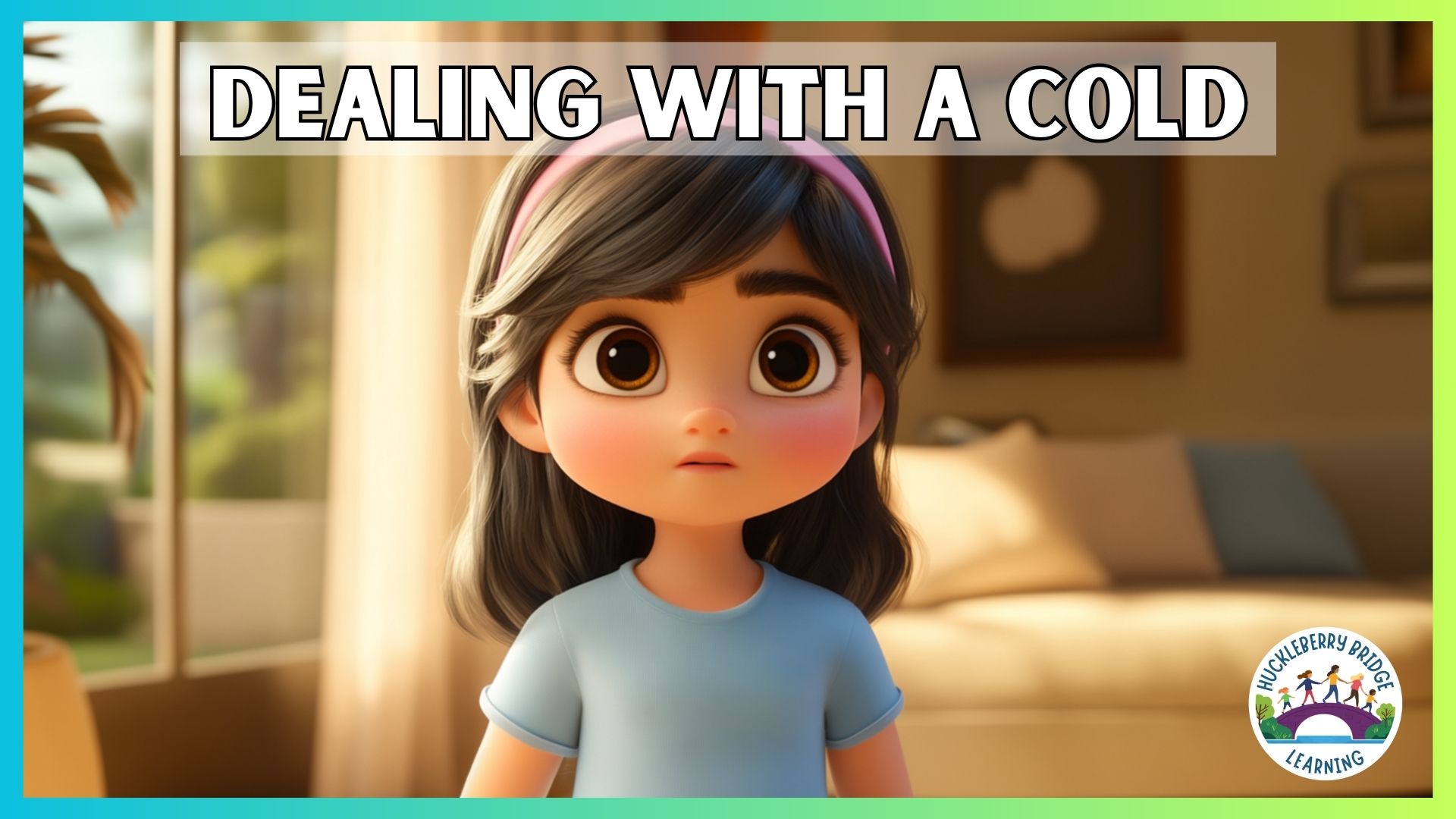
Dealing with a Cold | Companion Activity reinforces the healthy habits and social expectations from the life skills video through interactive and engaging exercises. Students answer yes/no and WH-questions, complete sequencing tasks, and retell the video using visual supports to strengthen understanding. They practice identifying healthy choices, such as covering coughs, using tissues, washing hands, and resting when sick. Problem-solving scenarios encourage students to recognize when it’s okay to attend school and when to stay home, as well as how to ask for help when they don’t feel well. Language-based activities include categorization of hygiene items, compare/contrast of healthy versus unhealthy habits, and utterance expansion using present progressive verbs and prepositions. These activities build comprehension, promote empathy for others, and encourage responsible self-care when feeling under the weather.

Learning Objectives
  1. Identify healthy behaviors for managing a cold, such as covering coughs, using tissues, and washing hands.

  2. Differentiate between appropriate and inappropriate choices when feeling unwell (e.g., knowing when to rest or attend school).

  3. Retell the video using sequencing cards and visual supports to demonstrate understanding.

  4. Answer comprehension questions (yes/no and WH-) about the video to reinforce key details.

  5. Practice problem-solving skills by identifying unsafe or unhealthy behaviors and selecting correct solutions.

  6. Categorize hygiene items and compare/contrast healthy versus unhealthy habits to build language and critical thinking skills.

  7. Use expanded utterances with present progressive verbs and prepositions to describe actions related to self-care.

  8. Develop empathy for others by understanding how personal health choices can affect those around them.

  9. Increase confidence in self-advocacy by practicing how to ask for help when feeling sick.

  10. Promote responsible self-care habits to support personal well-being and a healthy learning environment.

Associated Social Story
Associated Companion Activity