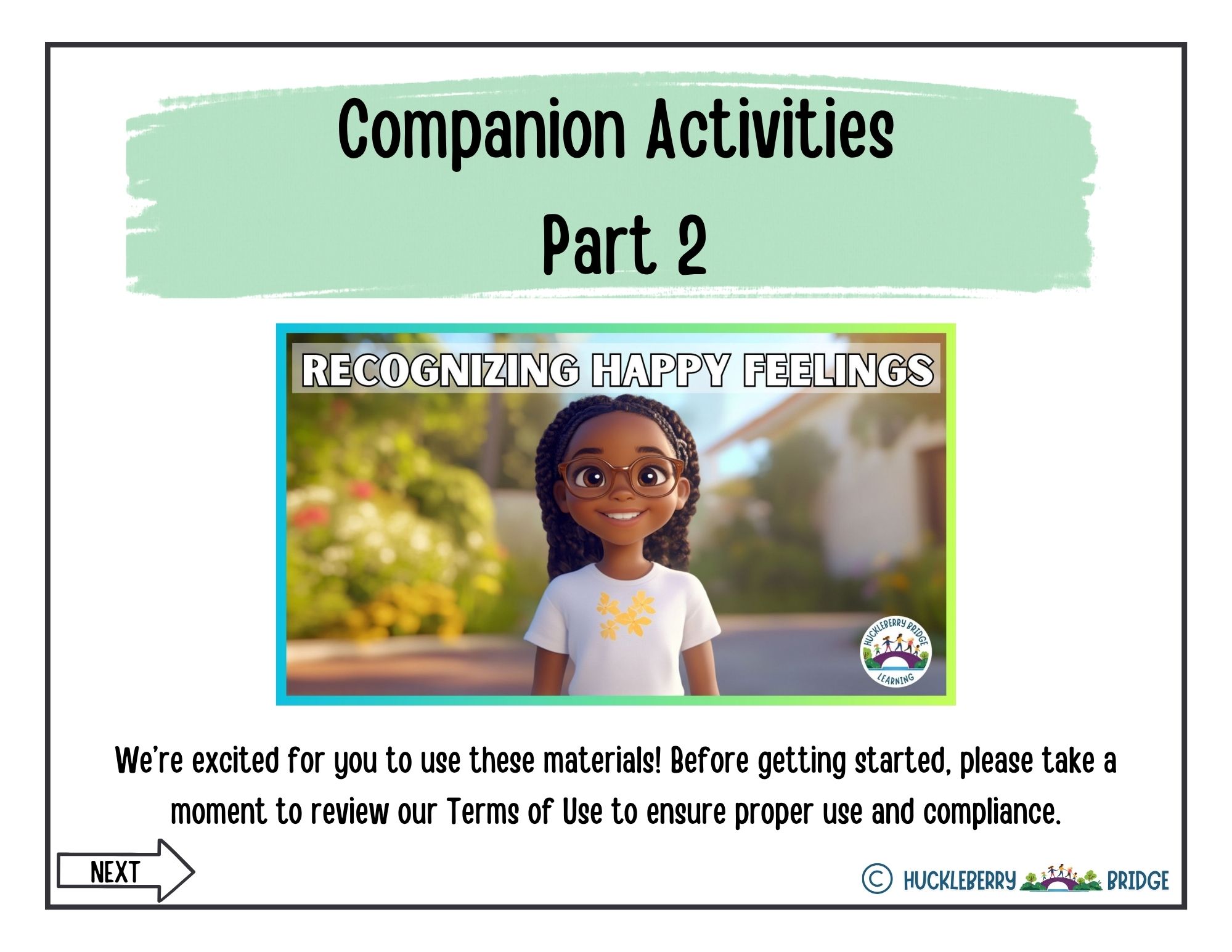
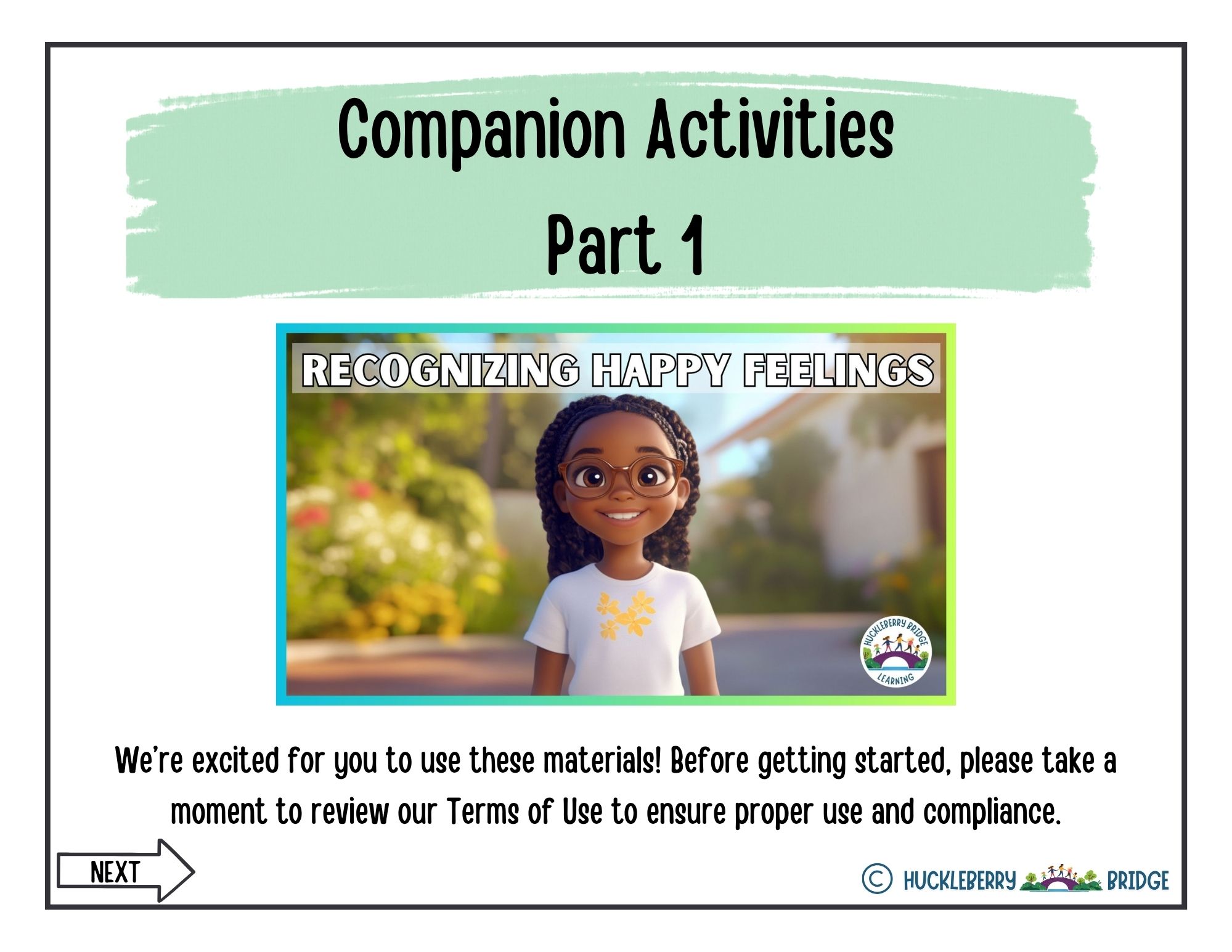
Recognizing Happy Feelings

Emotional Intelligence

Pre-K, Elementary, Middle School, High School

Learning Objectives
  1. Understand what it means to feel happy
  2. Identify common situations that may lead to feeling happy
  3. Recognize body cues and facial expressions that show happiness
  4. Observe happy behaviors in others such as smiling, laughing, or dancing
  5. Celebrate and respond to others’ joyful moments with kindness or shared excitement
  6. Build emotional awareness by noticing and remembering personal happy moments
  7. Strengthen social connections through shared joy and positive interactions

Kindergarten
CCSS.ELA-LITERACY.SL.K.1 – Participate in collaborative conversations
CCSS.ELA-LITERACY.SL.K.2 – Confirm understanding by asking and answering questions
CCSS.ELA-LITERACY.L.K.6 – Use words and phrases acquired through conversations

Grade 1
CCSS.ELA-LITERACY.SL.1.1 – Participate in collaborative conversations
CCSS.ELA-LITERACY.SL.1.2 – Ask and answer questions about key details in spoken information
CCSS.ELA-LITERACY.L.1.6 – Use words and phrases acquired through conversations

Grade 2
CCSS.ELA-LITERACY.SL.2.1 – Participate in collaborative conversations
CCSS.ELA-LITERACY.SL.2.2 – Recount or describe key ideas from oral presentations
CCSS.ELA-LITERACY.L.2.6 – Use acquired words and phrases to describe emotions and experiences

Grade 3
CCSS.ELA-LITERACY.SL.3.1 – Engage in collaborative discussions
CCSS.ELA-LITERACY.SL.3.2 – Determine main ideas and supporting details in spoken content
CCSS.ELA-LITERACY.L.3.6 – Use academic vocabulary to express feelings and ideas

Grade 4
CCSS.ELA-LITERACY.SL.4.1 – Engage effectively in collaborative discussions
CCSS.ELA-LITERACY.SL.4.2 – Paraphrase spoken ideas and emotional expressions
CCSS.ELA-LITERACY.L.4.6 – Use domain-specific and descriptive words for emotions and actions

Grade 5
CCSS.ELA-LITERACY.SL.5.1 – Participate in discussions, building on others’ ideas
CCSS.ELA-LITERACY.SL.5.2 – Summarize information presented orally or through other media
CCSS.ELA-LITERACY.L.5.6 – Use academic and emotional vocabulary in context

Grade 6
CCSS.ELA-LITERACY.SL.6.1 – Participate in collaborative discussions
CCSS.ELA-LITERACY.SL.6.2 – Interpret emotions and ideas from spoken and multimedia messages
CCSS.ELA-LITERACY.L.6.6 – Use general academic and domain-specific vocabulary

Grade 7
CCSS.ELA-LITERACY.SL.7.1 – Engage in collaborative discussions
CCSS.ELA-LITERACY.SL.7.2 – Analyze emotional content and ideas from multimedia sources
CCSS.ELA-LITERACY.L.7.6 – Acquire and use precise vocabulary for emotional expression

Grade 8
CCSS.ELA-LITERACY.SL.8.1 – Initiate and participate in collaborative discussions
CCSS.ELA-LITERACY.SL.8.2 – Analyze tone, purpose, and meaning in spoken and visual texts
CCSS.ELA-LITERACY.L.8.6 – Use vocabulary to clearly communicate emotional states and observations

  • The student will name at least two signs of happy feelings (e.g., smiling, sparkling eyes) in 4 out of 5 structured opportunities by [date].
  • The student will describe one situation that made them feel happy and why in 3 out of 4 guided discussions by [date].
  • The student will identify happy expressions or behaviors in others using pictures or video in 4 out of 5 trials with 80% accuracy by [date].
  • The student will respond to another person’s expression of joy with a socially appropriate action (e.g., smiling, kind comment) in 4 out of 5 role-play scenarios by [date].
  • The student will share one strategy for remembering happy moments (e.g., talking about them, drawing them) in 3 out of 4 sessions by [date].
  • The student will distinguish between happy and other emotional expressions in 4 out of 5 structured tasks using visual cues by [date].

Related Companion Activity