
Making Easy Transitions at School: Helping Kids Move Through the Day with Confidence
Transitions are a natural part of every school day — moving from arrival to the classroom, from one activity to another, or from work time to play time. For many children, these moments are manageable. But for others, transitions can be one of the most stressful parts of the day.
At Huckleberry Bridge Learning, we created the Making Easy Transitions at School life skills video and companion activity to help children understand what transitions are, why they happen, and how to move through them successfully. By combining predictable language, visuals, and structured practice, these resources help children build confidence and independence throughout their school day.
Why Transitions Can Be Hard for Kids
Transitions require children to stop one activity, shift attention, regulate emotions, and adjust expectations — often all at once. For students with developing executive functioning skills, this cognitive load can feel overwhelming.
Common transition challenges include:
-
Difficulty stopping a preferred activity
-
Anxiety about what comes next
-
Trouble understanding time concepts
-
Sensory overload (noise, movement, crowds)
-
Difficulty with flexibility and emotional regulation
Research consistently shows that unpredictable transitions increase stress and problem behaviors, particularly for students with autism, ADHD, or other developmental differences (Dettmer et al., 2000; Odom et al., 2010).
Why Explicitly Teaching Transitions Matters
Transitions are often treated as “in-between moments,” but they are actually critical learning opportunities. When children are supported during transitions, they are more likely to:
-
Remain emotionally regulated
-
Follow directions
-
Engage in learning activities
-
Reduce challenging behaviors
-
Build independence and confidence
Evidence-based classroom practices emphasize predictability, visual supports, and direct instruction as key factors in helping children transition successfully (Hume et al., 2012; Banda & Grimmett, 2008).
How the Making Easy Transitions at School Life Skills Video Helps
Life skills lessons are especially effective because they break abstract expectations into clear, concrete, and reassuring steps. Our Making Easy Transitions at School life skills lesson helps children understand:
-
What a transition is
-
Why transitions happen at school
-
What tools can help (visual schedules, timers, teacher cues)
-
What calm, successful transitions look like
-
How they can use strategies independently
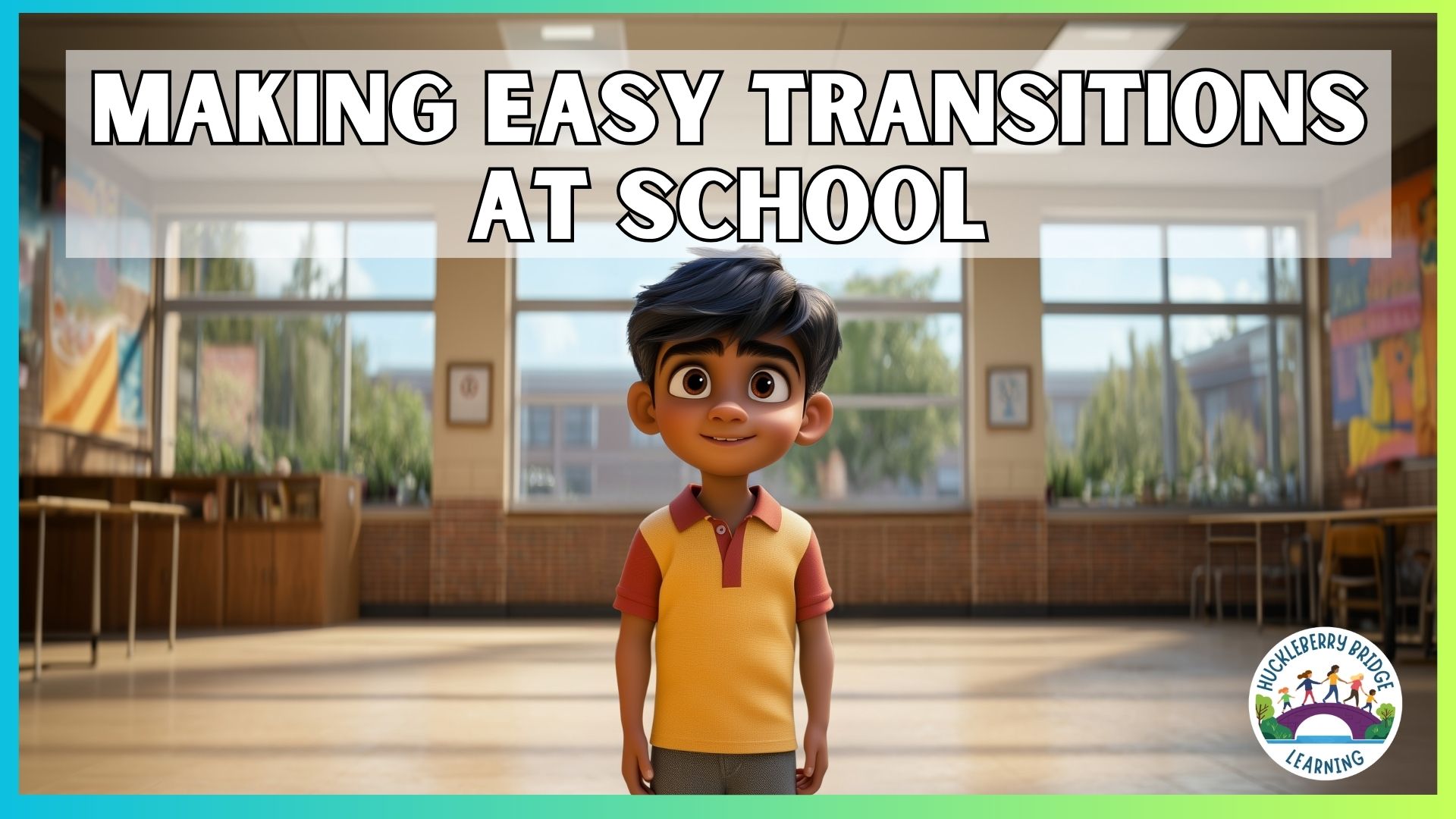
You can explore the video here: Making Easy Transitions at School – Life Skills Video
https://huckleberrybridge.com/video/making-easy-transitions-at-school/
Why Companion Activities Strengthen Learning
Understanding expectations is just the first step — practice is where skills stick.
The companion activity reinforces the life skills video by helping children:
-
Identify tools that support transitions (timer, schedule, teacher)
-
Practice sequencing using first–then language
-
Recognize emotions before and after transitions
-
Reflect on what strategies worked
-
Build independence through repetition
Research supports combining visual instruction with active practice to promote generalization and long-term success (Hume et al., 2012).
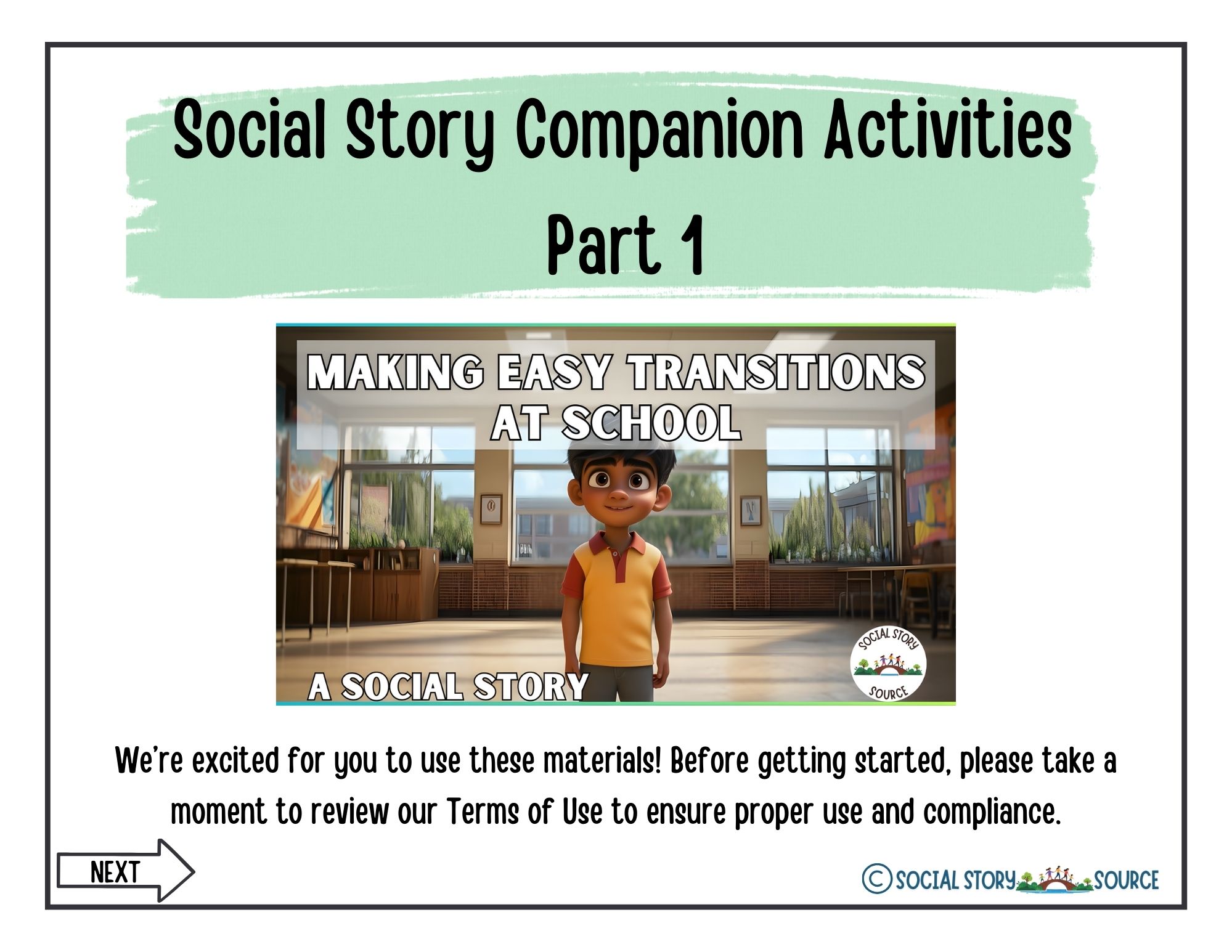
Explore the companion activity here: Making Easy Transitions at School – Companion Activity
https://huckleberrybridge.com/companion-activity/making-easy-transitions-at-school/
Using These Tools Across Home, School & Therapy
One of the strengths of this resource is flexibility. It can be used:
-
In classrooms during arrival, clean-up, or lining up
-
In therapy sessions to pre-teach routines
-
At home to support school readiness
-
In small groups or 1:1 instruction
-
As part of executive functioning or behavior goals
For example, a teacher may read the lesson before a known challenging transition, use a timer during the transition, and then complete part of the companion activity afterward to reflect on success.
Evidence-Based Tips for Easier Transitions
Pair the life skills video and companion activity with these research-supported strategies:
-
Preview transitions (“In five minutes, we will clean up.”)
-
Use visual supports (schedules, timers, first–then boards)
-
Offer limited choices to increase buy-in
-
Use consistent language across adults and settings
-
Celebrate effort, not perfection
Consistency and repetition help children internalize these routines over time (Dettmer et al., 2000).
Supporting Confident School Days
Transitions don’t have to be stressful. With the right tools, children can learn how to move through their day calmly, confidently, and successfully.
The Making Easy Transitions at School life skills video and companion activity were designed to provide structure, predictability, and meaningful practice — helping children feel prepared for what comes next.
When transitions feel easier, the entire day feels more successful.
Explore all of our transition and routine-based supports at HuckleberryBridge.com.
References
Banda, D. R., & Grimmett, E. (2008). Enhancing social and transition behaviors of persons with autism through visual supports.
https://pmc.ncbi.nlm.nih.gov/articles/PMC2600404/
Dettmer, S., Simpson, R. L., Myles, B. S., & Ganz, J. B. (2000). The use of visual supports to facilitate transitions of students with autism.
https://journals.sagepub.com/doi/10.1177/109830070000200402
Hume, K., Boyd, B., Hamm, J., & Kucharczyk, S. (2012). Supporting independence in adolescents on the autism spectrum.
https://link.springer.com/article/10.1007/s10803-011-1353-1
Odom, S. L., Collet-Klingenberg, L., Rogers, S. J., & Hatton, D. D. (2010). Evidence-based practices in interventions for children with autism spectrum disorders.
https://journals.sagepub.com/doi/10.1177/0271121410377515