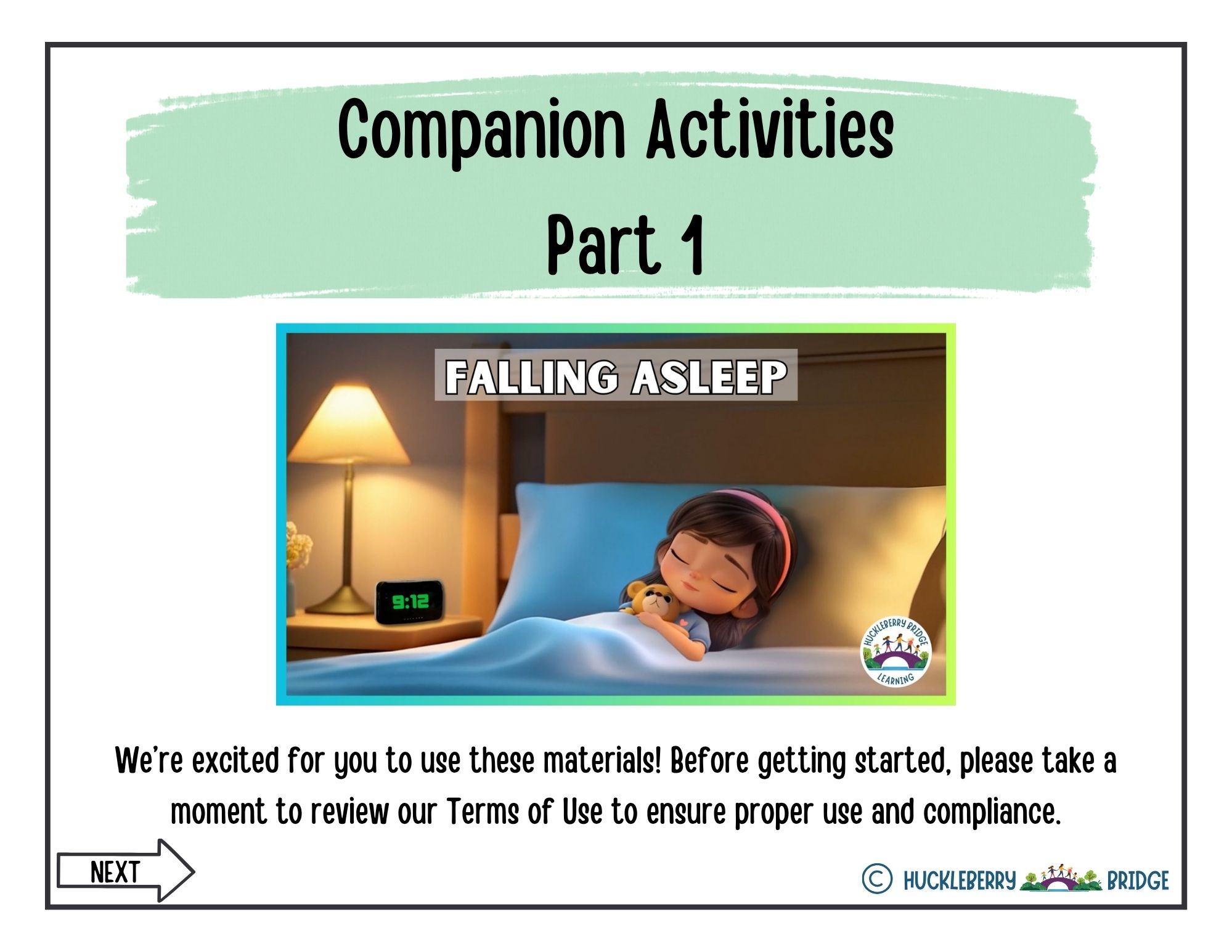
Falling Asleep

Daily Routines

Pre-K, Elementary, Middle School

Learning Objectives
  1. Identify calming activities that support bedtime readiness
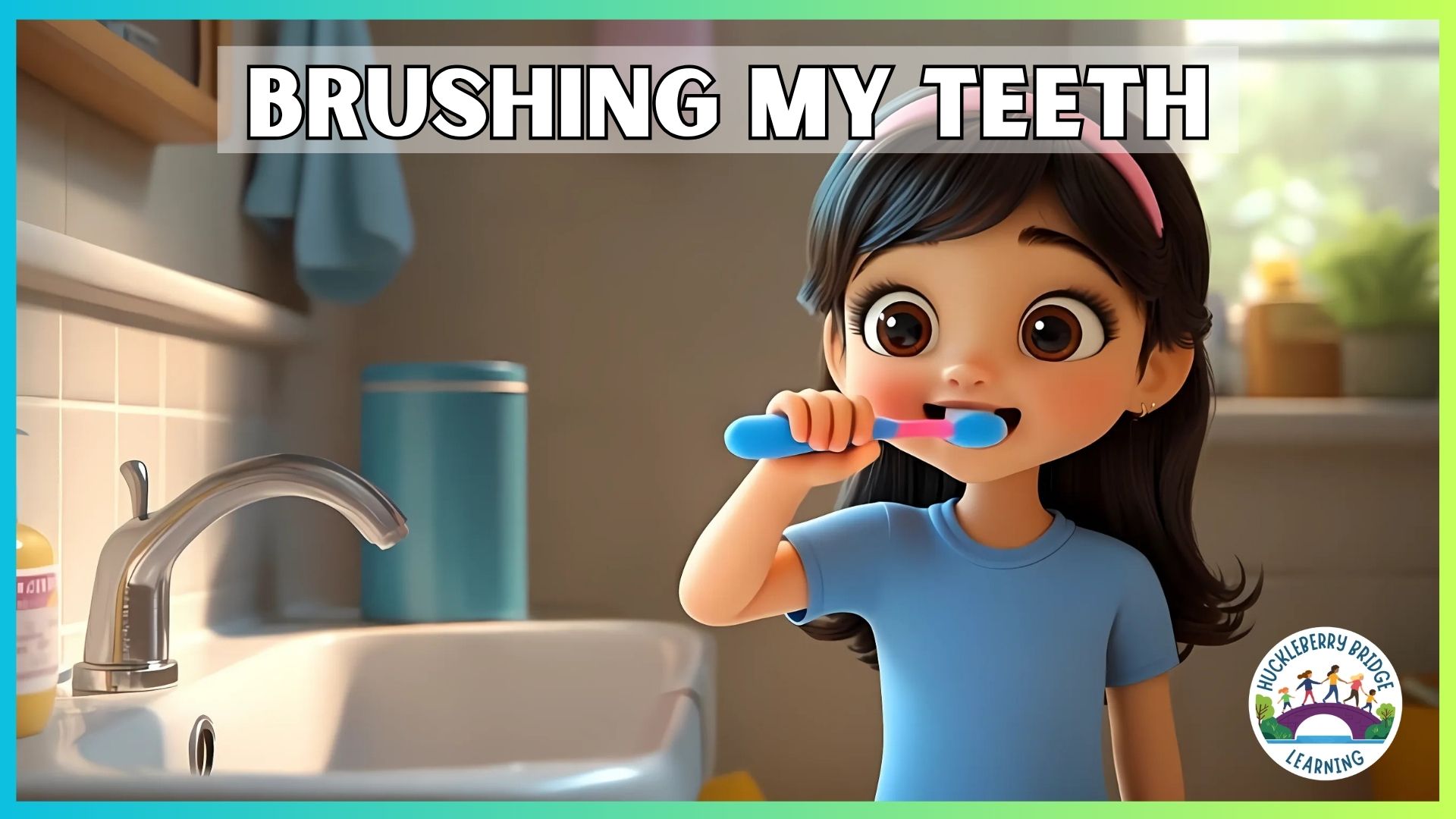
  2. Demonstrate an understanding of bedtime hygiene routines like brushing teeth and washing face
  3. Use visualization and deep breathing to relax the body and mind before sleep
  4. Recognize that it’s okay if falling asleep takes time
  5. Describe how consistent bedtime routines help the body prepare for rest
  6. Promote independence and self-regulation during nighttime routines

Kindergarten
CCSS.ELA-LITERACY.SL.K.1 – Participate in collaborative conversations with diverse partners
CCSS.ELA-LITERACY.SL.K.4 – Describe familiar routines with support
CCSS.ELA-LITERACY.L.K.6 – Use acquired vocabulary related to bedtime and emotions

Grade 1
CCSS.ELA-LITERACY.SL.1.1 – Engage in collaborative conversations about daily routines
CCSS.ELA-LITERACY.SL.1.4 – Describe familiar routines and calming strategies
CCSS.ELA-LITERACY.L.1.6 – Use words and phrases related to feelings and rest

Grade 2
CCSS.ELA-LITERACY.SL.2.1 – Participate in discussions about routines and self-care
CCSS.ELA-LITERACY.SL.2.4 – Describe strategies for calming down and getting ready for bed
CCSS.ELA-LITERACY.L.2.6 – Use acquired vocabulary related to personal habits and wellness

Grade 3
CCSS.ELA-LITERACY.SL.3.1 – Engage in group discussions about managing routines and emotions
CCSS.ELA-LITERACY.SL.3.4 – Report on familiar routines and their impact on wellbeing
CCSS.ELA-LITERACY.L.3.6 – Use academic and emotional vocabulary related to rest and mindfulness

Grade 4
CCSS.ELA-LITERACY.SL.4.1 – Participate in conversations about personal wellness and coping routines
CCSS.ELA-LITERACY.L.4.6 – Use precise vocabulary to describe daily habits and emotional regulation

Grades 5–8
CCSS.ELA-LITERACY.SL.5.1–8.1 – Engage in collaborative discussions about healthy habits and self-care
CCSS.ELA-LITERACY.SL.5.4–8.4 – Present personal strategies for wellness with detail and clarity
CCSS.ELA-LITERACY.L.5.6–8.6 – Use appropriate and domain-specific vocabulary when discussing routines and wellness

  • The student will describe three steps in their bedtime routine using complete sentences in 4 of 5 opportunities by [date].
  • The student will identify two calming strategies to use at bedtime and explain how they help with 80% accuracy by [date].
  • The student will demonstrate deep breathing and visualization techniques in structured tasks with verbal or visual cues in 4 of 5 sessions by [date].
  • The student will sequence four steps of a bedtime routine in the correct order in structured activities with 90% accuracy by [date].
  • The student will explain why sleep is important and identify one way bedtime routines help them feel calm in 4 of 5 structured trials by [date].
  • The student will participate in a role-play or discussion about bedtime, contributing one idea or example in each session by [date].

Related Companion Activity