Getting Ready to Learn

About This Video

Getting Ready to Learn is a supportive life skills video that helps children prepare their bodies and minds for learning. This video teaches learners to sit or stand safely, listen, look at materials, follow directions, and use strategies to help them feel ready to participate.

Learning Objectives

After watching this video, learners will:

  1. Understand what it means to be ready to learn
  2. Learn to organize a clean, distraction-free workspace
  3. Practice gathering only needed materials for learning
  4. Demonstrate calm, still body posture at a desk
  5. Use eyes to focus on the teacher and ears to listen
  6. Recognize the importance of keeping a quiet mouth during instruction
  7. Build self-awareness and responsibility for personal learning behavior

Resources for This Video

Use these resources to extend learning and build communication skills.

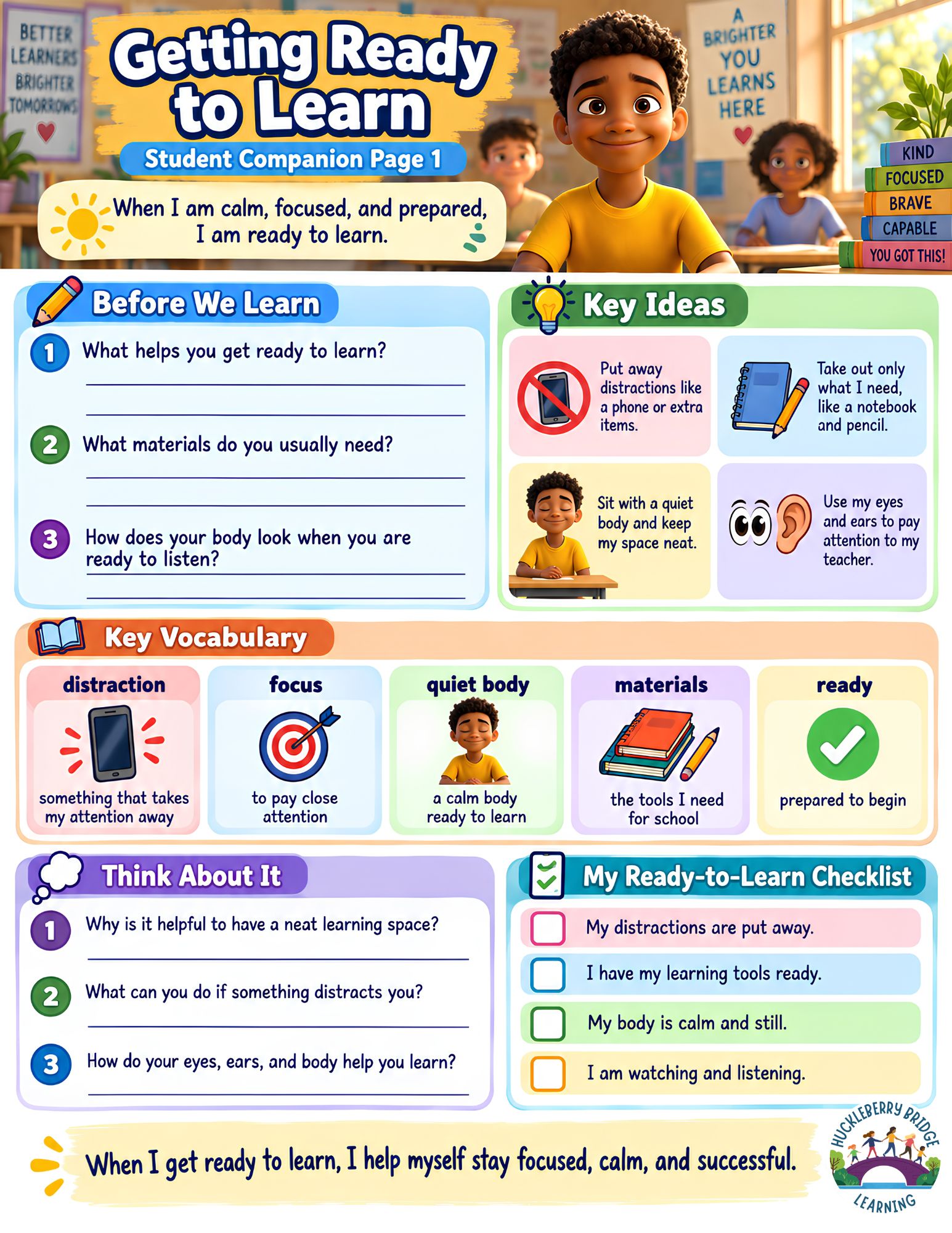
A digital guide with key concepts, visual supports, and review questions.

View Learning Guide

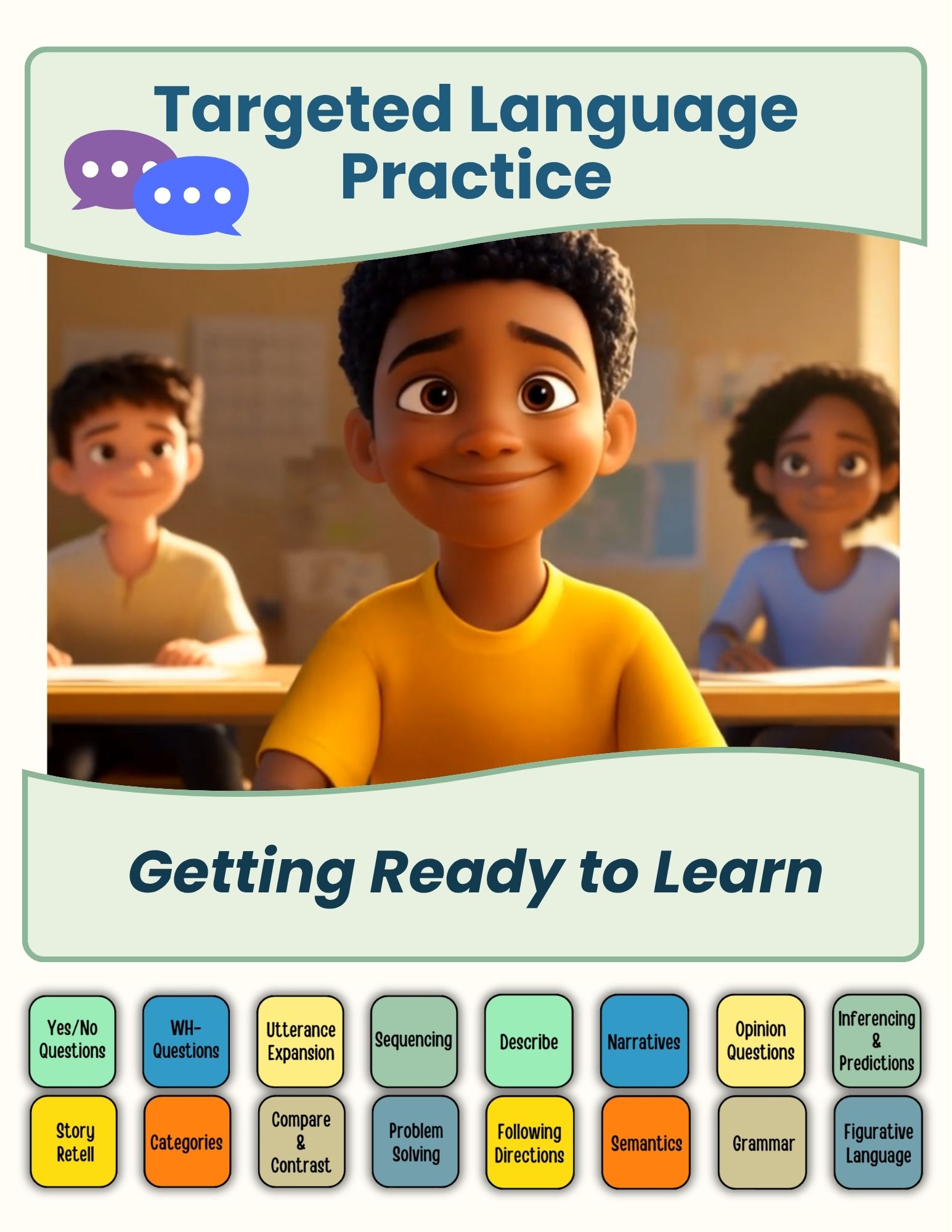
Practice language skills with targeted activities connected to the video.

Practice Language Skills

Clinician & Educator Supports

Kindergarten
CCSS.ELA-LITERACY.SL.K.1 – Participate in collaborative conversations
CCSS.ELA-LITERACY.SL.K.2 – Ask and answer questions to clarify understanding
CCSS.ELA-LITERACY.L.K.6 – Use words and phrases to describe routines and behaviors

Grade 1
CCSS.ELA-LITERACY.SL.1.1 – Participate in structured conversations
CCSS.ELA-LITERACY.SL.1.2 – Ask and answer questions about instructional content
CCSS.ELA-LITERACY.L.1.6 – Use language to describe attention and readiness behaviors

Grade 2
CCSS.ELA-LITERACY.SL.2.1 – Participate in collaborative discussions
CCSS.ELA-LITERACY.SL.2.2 – Recount or describe key ideas from lessons and routines
CCSS.ELA-LITERACY.L.2.6 – Use vocabulary to describe school expectations and personal routines

Grade 3
CCSS.ELA-LITERACY.SL.3.1 – Engage in respectful collaborative discussions
CCSS.ELA-LITERACY.SL.3.2 – Determine main ideas in spoken information
CCSS.ELA-LITERACY.L.3.6 – Use words to describe focus, listening, and organization

Grade 4
CCSS.ELA-LITERACY.SL.4.1 – Participate effectively in group settings
CCSS.ELA-LITERACY.SL.4.2 – Paraphrase ideas shared by others and in lessons
CCSS.ELA-LITERACY.L.4.6 – Use vocabulary to express learning habits and routines

Grade 5
CCSS.ELA-LITERACY.SL.5.1 – Participate in discussions, building on others’ ideas
CCSS.ELA-LITERACY.SL.5.2 – Summarize instructional information and classroom expectations
CCSS.ELA-LITERACY.L.5.6 – Use vocabulary to describe responsible and focused learning behavior

Grade 6
CCSS.ELA-LITERACY.SL.6.1 – Participate in collaborative discussions
CCSS.ELA-LITERACY.SL.6.2 – Interpret key points in spoken instructional messages
CCSS.ELA-LITERACY.L.6.6 – Use vocabulary to express self-management and academic behaviors

Grade 7
CCSS.ELA-LITERACY.SL.7.1 – Engage respectfully in classroom conversations
CCSS.ELA-LITERACY.SL.7.2 – Analyze spoken content and directions
CCSS.ELA-LITERACY.L.7.6 – Use precise vocabulary to describe academic expectations and self-regulation

Grade 8
CCSS.ELA-LITERACY.SL.8.1 – Participate in academic discussions
CCSS.ELA-LITERACY.SL.8.2 – Analyze and summarize key points from instructions or lectures
CCSS.ELA-LITERACY.L.8.6 – Use vocabulary to describe preparation and readiness for learning

  • The student will identify three steps for getting ready to learn (e.g., clear space, quiet body, gather materials) in 4 out of 5 trials with visual support by [date].
  • The student will organize a clean, distraction-free workspace with visual prompts in 4 out of 5 structured tasks by [date].
  • The student will demonstrate sitting with a calm body (e.g., still hands, feet on floor) during a 5-minute learning task in 4 out of 5 sessions by [date].
  • The student will follow a two-step direction to prepare for learning (e.g., “put away your toy, take out your book”) in 4 out of 5 opportunities by [date].
  • The student will describe how quiet mouths and listening ears help the class during instruction in 3 out of 4 discussions by [date].
  • The student will complete a visual checklist for getting ready to learn independently in 4 out of 5 trials by [date].

Keep Learning

Explore more videos that build related skills.